
The Big Question
Why do some online stores earn a customer's card details on the first visit, while others can't close a sale even with a discount code?
The answer is trust—and trust in ecommerce is not a vague, intangible quality. It is a measurable outcome of specific design and functional decisions. A shopper lands on your site, and within seconds their brain runs a silent checklist: Does this look legitimate? Is my payment safe? Will I actually get what I ordered? Can I get my money back if something goes wrong?
Every feature on your store either answers those questions or leaves them hanging. According to industry research, the vast majority of shoppers abandon carts not because of price, but because of doubt—about security, about returns, about whether the store is real. That doubt is expensive. It lives quietly in your abandoned cart rate, your bounce rate, and your repeat purchase percentage.
From my CEO seat, I've seen clients obsess over product photography and discount strategies while ignoring the trust infrastructure underneath. A beautiful store that feels unsafe is a beautiful store that doesn't convert. The features I'm about to walk you through are not decorative. They are the load-bearing walls of your online business.
The Trust Signals That Actually Matter
Visible Security and Payment Badges
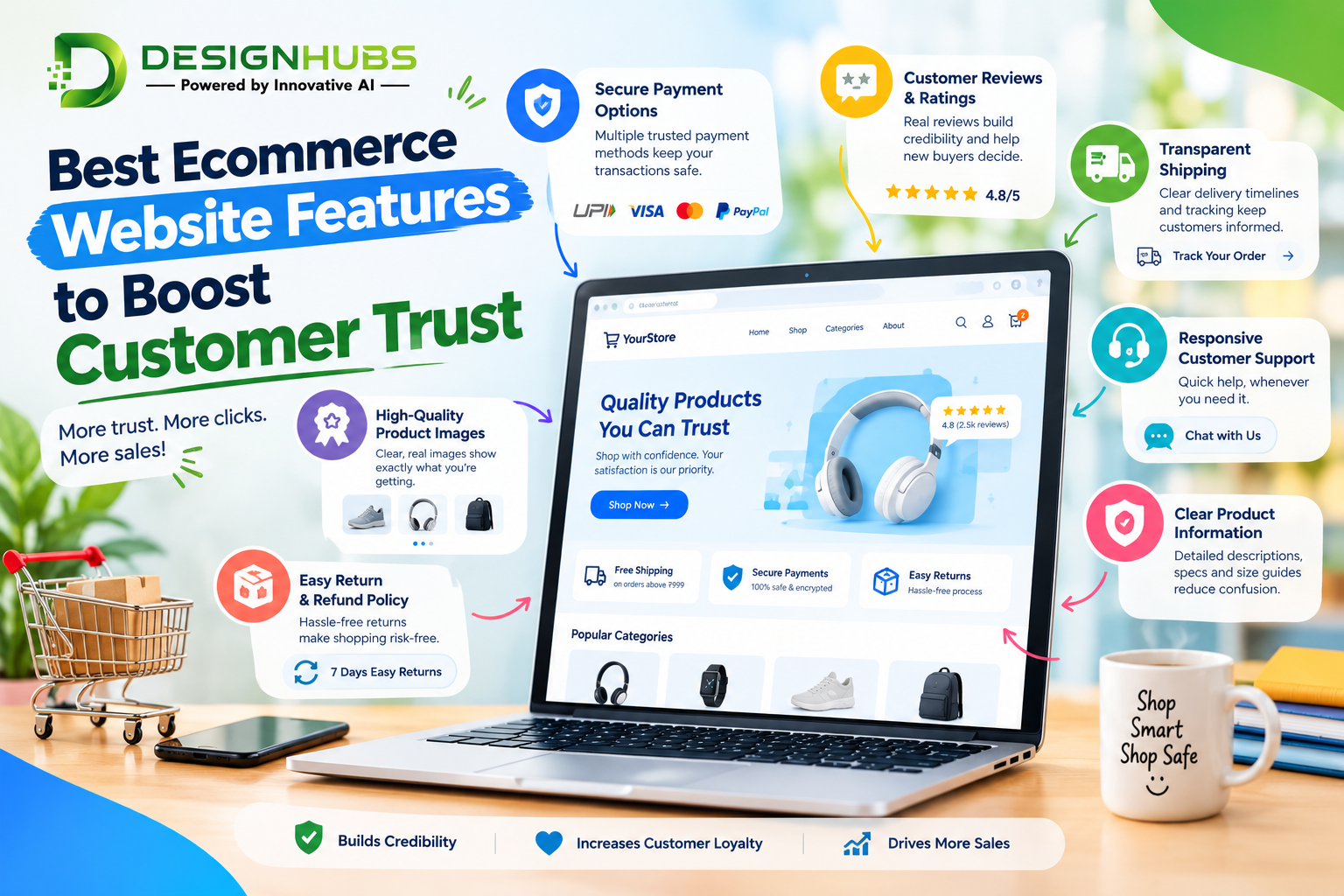
This is the baseline, and yet so many stores get it wrong. Shoppers need to see, without scrolling or searching, that your checkout is secure. SSL certificates, trusted payment gateway logos (Visa, Mastercard, PayPal, UPI), and clear security badges near the checkout button reduce anxiety at the exact moment it peaks .
But here's the nuance most stores miss: security badges placed randomly around the page look decorative. Security badges placed next to the payment fields and the buy button look functional. Context matters. Trust signals work when they appear at the moment of doubt, not scattered like confetti.
Authentic Customer Reviews and Ratings
Nothing builds trust faster than other customers saying you delivered. But fake-looking reviews destroy trust faster than no reviews at all. The features that work are the ones that feel human: verified purchase badges, star ratings with review counts, photos from real customers, and—critically—the occasional negative review with a thoughtful response .
A store with a 4.6-star average and a few visible complaints reads as honest. A store with nothing but flawless five-star reviews reads as suspicious. Shoppers are sophisticated. They trust stores that look like they've survived real customers.
Transparent Return and Refund Policies
If a shopper has to hunt for your return policy, they assume you don't have one—or that it's designed to trap them. Place a clear, plain-language return and refund policy link in the header, near the product price, and at checkout. State the window, the conditions, and who pays for return shipping.
Stores that make returns easy see higher conversion rates, not lower. The policy isn't a cost center. It's a conversion feature. When a shopper knows they can change their mind, they're far more willing to make a decision.
Real Contact Information and Human Presence
An email address hidden behind a contact form is a red flag. A physical address, a phone number, a chat widget, and a real "About Us" page with actual faces—these are the features that separate a store from a scam in the shopper's mind .
In 2026, this extends to AI chat support that actually resolves issues rather than looping customers through useless menus. Trust is built when help is easy to find and actually helps. Nothing erodes trust faster than a chatbot that can't answer a basic question about shipping.
Detailed Product Information and Honest Photography
Trust begins before the cart. Product pages need multiple angles, zoom functionality, accurate dimensions, materials, compatibility notes, and honest descriptions. Sizing charts that reflect reality. Stock status that updates in real time.
The features that build trust here are the unglamorous ones: clear shipping timelines, estimated delivery dates, and inventory accuracy. A shopper who sees "Only 2 left" and then finds the item back in stock tomorrow learns not to trust your urgency signals. Consistency is a trust feature.
Fast, Predictable Checkout
Every additional form field, every forced account creation, every surprise shipping cost at the final step is a trust breach. Guest checkout, autofill support, multiple payment options, and upfront shipping costs are not just convenience features—they are trust features .
Research consistently shows that unexpected costs are the single biggest cause of cart abandonment. When a shopper reaches checkout expecting one total and sees another, they don't just leave. They leave believing you tried to trick them.
Trust Features That Look Good But Do Little
I'll be honest about the features that get sold hard but rarely move the needle.
Generic trust seals from unknown authorities. A badge from a certification body no one has heard of doesn't reassure anyone. Shoppers recognize established payment logos and platforms. Everything else is decoration.
Social media follower counts. A large Instagram following doesn't prove you'll deliver a product. It proves you can buy followers. Sophisticated shoppers know this.
Excessive urgency tactics. Countdown timers, flashing "only 1 left" alerts, and pop-ups screaming about expiring discounts create pressure, not trust. Used sparingly, they can work. Used constantly, they signal desperation—or deception.
Over-designed animations and effects. Motion can delight, but it can also slow your site down and distract from the information shoppers need to feel safe. Performance is a trust feature. A sluggish site feels unreliable, no matter how beautiful it looks.
Prioritizing Trust Features on a Budget
Not every store can build everything at once. Here's the order I recommend to clients, based on impact per dollar.
First: get the fundamentals flawless. SSL, visible payment logos, working contact information, clear return policy, accurate product data, and a checkout that doesn't surprise people. These are non-negotiable. Without them, nothing else matters.
Second: build review infrastructure. Verified purchase reviews, star ratings, and a system for responding to feedback. Even a simple review widget integrated with your order system is worth more than a fancy homepage animation.
Third: add real-time support. A chat widget—human or AI-powered—that answers shipping, returns, and product questions. In 2026, AI support that resolves issues quickly is a genuine competitive advantage, not a gimmick.
Fourth: invest in performance. Fast load times, mobile optimization, and reliable uptime. These are invisible when they work and catastrophic when they fail.
What Trust Costs in 2026
Trust features aren't free, but they're rarely the biggest line item in a build. Here's a realistic range.
A basic trust foundation—SSL, payment badges, policy pages, contact information, and a clean checkout—is usually included in any competent ecommerce build, which in 2026 runs from $12,000 for a templated store to $30,000+ for a custom build.
Review systems, chat support integration, and advanced analytics typically add $1,000 to $5,000 depending on the platform and customization.
Performance optimization—image compression, caching, CDN setup, and mobile tuning—is often the highest-ROI investment and can range from $500 for basic optimization to several thousand dollars for a full performance audit and rebuild.
The most important cost question isn't what these features cost to build. It's what their absence costs you every month in abandoned carts. Most stores I've audited recover the entire investment within a quarter once trust friction is removed.
Why Delhi Is Our Base for Ecommerce Builds
Delhi's ecosystem of AI development, design talent, and ecommerce platform expertise makes it an ideal base for building trust-first online stores. The proximity to payment gateway providers, logistics partners, and support infrastructure means we can integrate the features that matter—fast checkout, reliable support, real-time inventory—without the delays that plague distributed teams.
When your ecommerce partner sits in an ecosystem that understands both the technology and the market, trust features stop being abstract best practices. They become working infrastructure.
What We Offer
We build ecommerce stores that earn trust before they ask for the sale.
That means we start with the fundamentals—security, transparency, honest product information, and a checkout that doesn't surprise anyone—and layer on the advanced features that actually move conversion: verified reviews, AI-powered support, performance optimization, and analytics that show you exactly where trust is breaking down.
We don't sell feature lists. We solve abandonment problems. If your store looks good but isn't converting, we'll tell you exactly which trust features are missing and which ones you can safely ignore.
If you're ready to build an online store that customers actually trust, start a conversation with us at DesignHubs.
Frequently Asked Questions
What is the most important trust feature for an ecommerce website?
Visible security and payment badges at checkout, combined with a clear return policy and real contact information. These address the shopper's core doubts—safety, legitimacy, and recourse—at the exact moment they matter.
Do customer reviews really increase sales?
Yes, when they're authentic. Verified purchase reviews with a mix of ratings build more trust than flawless five-star displays. Shoppers trust stores that look like they've survived real customers, not stores that look curated.
How do I reduce cart abandonment?
Remove surprises. Show shipping costs upfront, offer guest checkout, reduce form fields, and display security badges near payment fields. Most abandonment is caused by doubt or unexpected friction, not by price.
Are trust badges worth the money?
Only established, recognizable ones. Payment gateway logos and platform certifications reassure shoppers. Generic badges from unknown authorities do nothing. Spend on real security and transparency before spending on decorative seals.
Can AI chatbots help build trust?
Yes, if they actually resolve issues. An AI assistant that answers shipping, returns, and product questions quickly reduces anxiety and saves support costs. One that loops customers through useless menus destroys trust faster than no chat at all.